
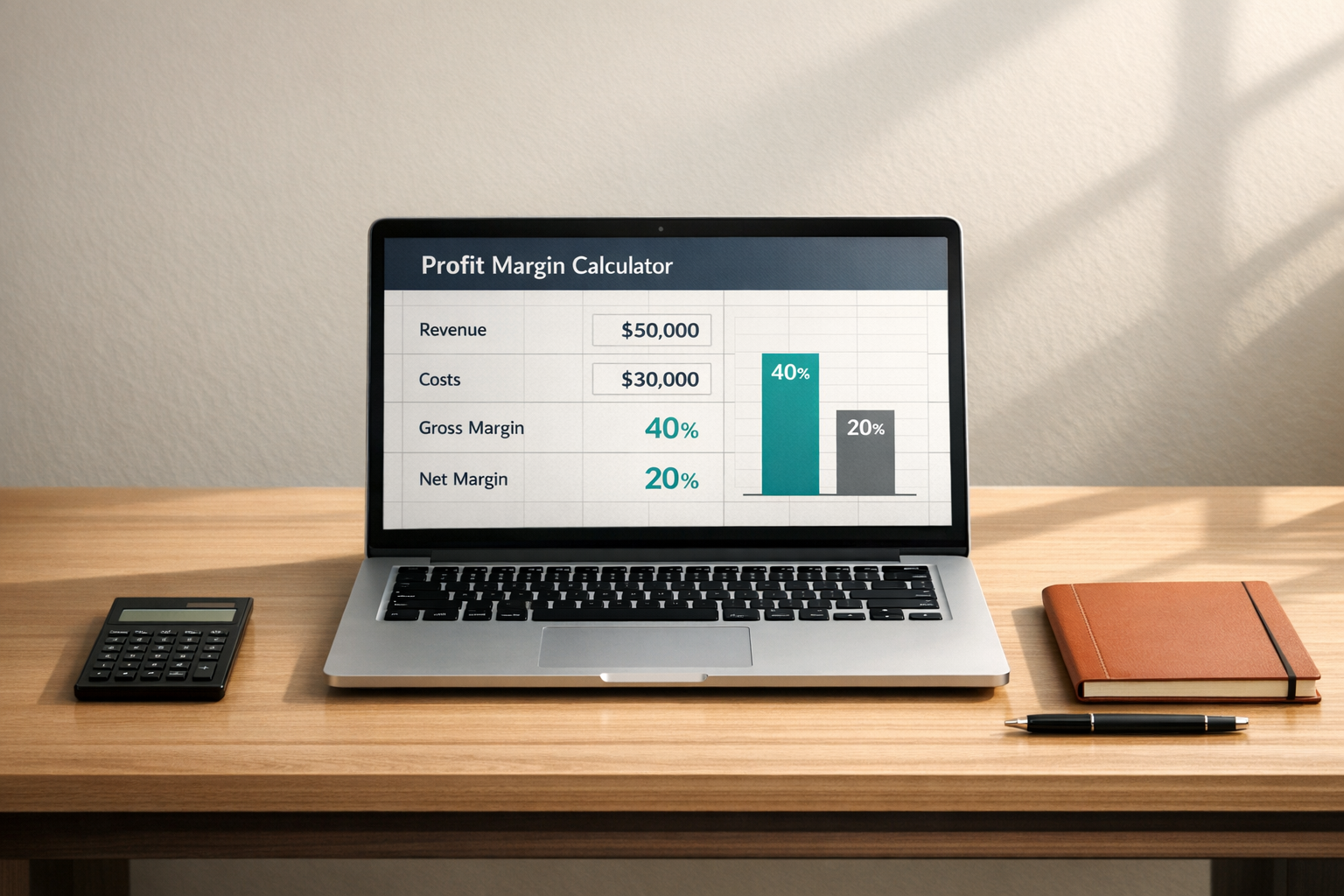
Small Business Profit Margin Calculator
Unlock Your Business Potential with a Profit Margin Calculator
Running a small business comes with endless challenges, from managing inventory to keeping customers happy. But one thing that can make or break your success is understanding your financial health. That’s where a tool to calculate profit margins becomes a game-changer. It’s not just about numbers—it’s about knowing what’s working and where you can improve.
Why Financial Clarity Matters
For entrepreneurs, every dollar counts. Figuring out how much of your revenue turns into actual profit helps you set better prices, control costs, and plan for growth. A simple way to assess this is by looking at your gross and net margins. Gross margin reveals what’s left after direct costs, while net margin accounts for everything else, like overhead. Having these insights at your fingertips means you’re not guessing—you’re strategizing.
Make Decisions with Confidence
Whether you’re a freelancer, retailer, or service provider, tracking profitability is key to staying competitive. With the right calculator, you can input your revenue and expenses in seconds and get a clear breakdown. Stop wondering if you’re on the right track. Use this resource to analyze your earnings and take control of your small business journey today.


We respect your digital space
We use cookies (the digital kind) to personalize your experience, improve performance, and understand what matters most to you. You’re in control—feel free to adjust your preferences. To learn more, please visit our Cookie Policy.